Breathe cleaner air in your home

Here’s all you need to know about houseplants!

We live in increasingly polluted environments – both inside and outside! Trees and plants remain the best ‘machines’ for pumping down carbon dioxide and supplying us with clean air.

Without good, clean air, we have less energy and are more prone to allergies and poor health. If you want to improve your home or work space, here are a few reasons why you could consider plants in your home and office.

Choose the plants wisely

If you decide to go for indoor plants, do your research around what different types of plants contain and where they can work best. You’ll find that some plants work best with pets whilst others are toxic to animals and children. Some too are better for the kitchen, others work well in living spaces and others are great for bathrooms and bedrooms.

Are you caring enough?

Caring for living things, like plants and pets, gives you a bigger sense of reward and develops your caring character. Be willing to take care of the plants when you introduce them into your home. As part of your research you can learn about the best ways to take care of the plants.

Don’t have more plants than you can manage, as you have to regularly take care of them.

Cacti and succulents are said to be good plants if you’re a beginner with indoor plants. Plants like Garden Mum, Peace lily and Aloe Vera are great options that are easy to grow and they come with serious health wins. Some, like lavender, release a beautiful aroma into your home whilst ferns are super for filtering the air.

Plants also jazz up your space

A nice looking plant is also a cool decoration for your home. Some say seeing greenery can make you feel more relaxed and calm – good for your everyday mood!

Group your plants together nicely according to different widths and heights. The size difference gives a more organic look than plants of the same size. Setting up plants of the same colour together can be a good idea too.

To make a well-informed decision about your plants and how best to use them as air purifiers, chat to your local nursery and remember, start with easy plants!

Breathing cleaner air doesn’t have to come at the expense of high-end air conditioners – use nature’s purifiers!

Setting goals and taking stock

How you finish your year is a powerful way to create momentum for the new year. How much you achieved (or didn’t quite manage) this year can inspire how much you aim to achieve next year. In the same way that an athlete pushes harder in every game, or an artist stretches their skills with each new work, so too can we set our sights higher for the year ahead.

And, planning for it now presents us with an opportunity of walking into the new year knowing what we want to achieve, right from the starting blocks!

Here are some tips to help you set next year’s goals.

Reflect on the current year’s achievements

What you want is most effectively framed by looking at what you already have. Reflecting on the goals achieved this year gives you an idea of what you could strive for in the new year.

Take some time to reflect on your current plans and check how much progress you’ve made. Reflect on what you drew motivation from, for example; consider the books you’ve read that gave you new insights, or flip through your playlists for music that made you feel productive, creative and positive.

Reflect on your hurdles as well; this can help you know what you need to work on in order to achieve more next year and complete the goals that you haven’t ticked off your list yet.

Think about your short and long term achievements

Seeing all these goals as part of your overall life plan will give the confidence to continue pursuing them. So, as much as it is important to attach a timeframe to your goals, keep in mind that 12 months can be a short time to achieve everything. Be kind to yourself and don’t be afraid to lengthen your timelines.

Set S.M.A.R.T goals

Many people love this approach to setting achievable goals.

  • Specific – Set simple and specific goals. Try brainstorming your goals and discuss what you want to accomplish, why it matters, who is involved, where it’s located and which resources are required.
  • Measurable – Measure your goals and keep tabs on your progress. You can measure your goals by asking yourself questions like, How will I know when it’s accomplished?, How much effort do I need to put in?
  • Achievable – Set realistic and attainable goals that are within your abilities to achieve. An achievable goal is something that you can easily figure out how to accomplish within your constraints.
  • Relevant – Set goals that matter to you and align with your life goals. Just because you see your friends swimming in the deep end, doesn’t mean you should start there when you learn how to swim.
  • Time-bound – Instead of simply saying “Next year I want to learn how to swim”, set a specific timeframe for you to accomplish that goal. Attaching a time to it, is designed to prevent you from being complacent and remember your deadlines.

Create a strategy for success

Have a plan of action for your goals. Write out the next steps you need to accomplish them. Develop a map and routine for your goals.

For example, if you want to lose weight. Your plan would look something like this:

  • Your why: To feel light, healthy and athletic
  • Action 1: Drinking at least eight glasses of water per day and substituting the Friday afternoon beer with a vegetable shake, for the next 6 weeks.
  • Action 2: Go running twice a week and do more chores – learn to be busier and active.
  • Routine: Weigh yourself at least once a week to keep track of your progress.

Have someone who will hold you accountable

This is powerful! Choosing someone who you trust and will listen to will keep you motivated and remind you of what you wanted to achieve. It’s as valuable as a snooze button in the morning… sometimes you need a second alarm to wake up properly.

Even if one of the ideas above helps you, remember, these are YOUR goals. They’re not a chore or an obligation; they’re your commitment to a better you.

Watching what you spend… and what you eat!

With all the treats at the social gatherings, watching both your budget and your diet during the festive season can be a challenge.

Whether we’re talking about savings goals, or weight goals, it’s easy to get a little carried away. It’s wonderful to treat your loved ones and enjoy yourself, and during a holiday it’s important to be kind to yourself and let loose a little. However, if you want to enjoy the season to its fullest, it’s helpful to have a positive mindfulness towards what you’re consuming.

An over-inflated tummy can be just as troubling as over-inflated expenses that need to be paid back in the months to come.

With the former… here are some tips you can use to help you keep to your health goals during the festive season!

Eat lots of fruit and vegetables

Whilst you don’t have to stick to every calorie (because that’s a serious buzzkill) use your current dietary goals as guidelines that you’re willing to be flexible with.

Fill out every meal and snack time with fruits and veggies. You can even bring your healthy meals to the social events you will be attending. Offering to bring your own dish of greens may be a good idea.

If you’re hosting, that means you have control of the menu. You can make healthier choices when shopping for the party, your guests may appreciate some healthy (and tastier) alternatives too. Healthy eaters are happy Peters!

Eat enough – check your meal portions

If that lavish roast on the table, with all that sauce, looks too good to avoid, don’t go wild on it. Have a glass of water before a big meal and you will be less likely to overeat. Don’t continue eating even when you feel full, you’ll regret it an hour later and enjoy the rest of your afternoon/evening far less.

If you have kids, or are celebrating with other people who have children, check how they feel about sweets and treats and don’t hand out chocolatey temptations without their consent.

If you go to restaurants with harvest tables, remember that the size of your portions equal the amount you will pay. So, being practical about your meal portions means being practical about your finances as well.

As the host, don’t over cater; avoid wasting food and don’t go over your food budget.

Keep to your exercise regime by changing it up a little…

Another key aspect to feeling happy and healthy is stimulating the flow of endorphins. It’s not always easy to keep up with a training schedule, or gym visits over the festive season, so why not consider mixing it up a little?

If you can’t run on the treadmill, ask your family to join you on a walk or trail. Spend some time on the trampoline with the kids, swim some lengths in the pool with a child on your back or play some pool games with your mates. Take the dogs for a run on the beach or explore a new trail that you’ve been dying to visit.

Remember, looking after your health doesn’t have to happen under the false-lighting of a near-empty Virgin Active.

Making mindful choices during the festive season is good for both your health and financial goals. Your holiday budget should align with your health goals, how much (and what) you eat will affect how much you spend.

You are in charge. You’re able to make healthy choices that will help you enjoy the festive season. Eat well and spend well!

The retirement gap needs a new rap

Retirement (as well as education and the job market) is one of our greatest future-unknowns.

We know it will happen… but we are finding it harder to understand and predict what it might look like. This doesn’t mean we should abandon planning for it. If anything, it simply means that we need to change the way we start to talk about, engage with and plan for retirement.

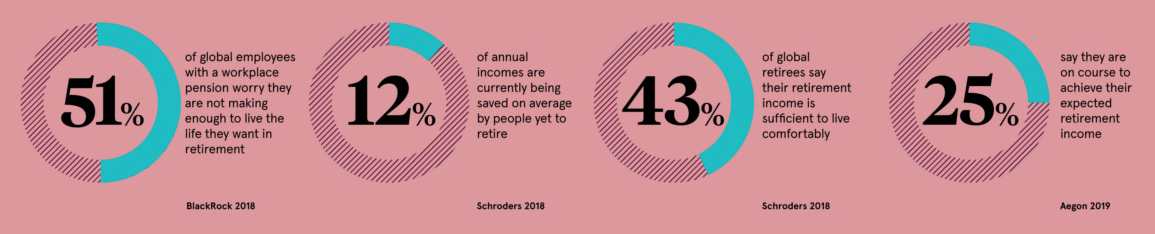
According to a global survey done by BlackRock, about 51% of the world’s working population, worry that their workplace pension will not cover the retirement life they want. This is why most people have a dim view of retirement. But this view is mostly framed by the conversation that retirement is meant to be a welcome reward following a successful working career. In other words, we work for about 45 years, and then we take a 20 year paid vacation….

The biggest problem with this picture is that very few people are able to save for that full 45 year period, and even fewer manage to avoid having to draw on these savings for unforeseen expenses ahead of their retirement.

That’s why we have a rap about the gap that’s not very helpful.

If we are to change this conversation and try to gain a more helpful understanding of retirement, we need to find out how to ask better questions.

How are you shaping your expectations for retirement?

A Schroders 2018 survey, showed that people usually receive less than what they expected their retirement income to be. It is important to know how much you will receive as this needs to align with your planning and your expectations. Whilst retirement is not only about how much you will earn, it’s important to know what you will have to work with.

If you would like to have the opportunity to study further, open a new business, pursue new hobbies, travel or live abroad, planning for a renewable income as well as new income sources is important.

The same Schroders survey also found that 43% of global retirees, who said their income was less than expected, still felt like their retirement income was sufficient to live off comfortably.

Some people continue working into their retirement years; not because they have to, but because they choose to. This is great as it’s part of reframing our expectations for retirement. Ideally, you don’t want to work because you are forced into it for financial reasons, but you also don’t want to avoid work opportunities purely because your expectations of retirement exclude those opportunities.

(Taken from Visual Capitalist.)

What does ‘planning ahead’ actually mean to you?

An Aegon 2019 survey says, 25% of global employees say they are on course to achieving their expected retirement income. This is often perceived as meaning: they’ve started early.

But what does ‘early’ mean for you and your personal plan? Planning for retirement even while in your 20s or 30s gives you more time to invest and grow your retirement capital. But that doesn’t mean you can’t start in your 40s. Yes, the later you start certainly poses more challenges, but not if you have other elements in your plan, or it’s part of how you perceive your retirement.

Defining your event horizon (ie. when you would like to retire) is crucial to both your mindset and your investment success. If you start with a positive and personally relevant view of what your retirement (not someone else’s) will look like, you are far more likely to achieve your goals.

How much are you willing to share with your adviser?

Help from a financial adviser has been proven to significantly improve the financial wellbeing of people – both before and after retirement. However, the level at which financial guidance and intervention can help depends on how much you’re willing to share with your financial adviser.

Building a relationship of deep trust, over time, is most often the best way to ensure open and clear communication in a financial planning relationship. Retirement should be enjoyed, not feared!

Effective planning for retirement helps you create expectations that enable you to look forward to retirement.

Earning more isn’t the answer

When it comes to building your wealth, it’s not about how much you make, it’s about how you work with what you have. You do not need a larger paycheck, you only need to invest and use your money wisely. Yes, more money gives you a larger budget to work from but that simply needs increased consideration.

Here are some tips that will make it easier to build your wealth, even if you do not have a large income.

Adopt better spending habits

Using your money wisely begins with controlling how you spend. If you earn more, and you land up spending more (often on things you may not need), your wealth building plans will never come to fruition. It will simply be: more money in, more money out.

Good spending habits have a positive impact on your wealth building ability. Practically, this looks like a constant assessment, and re-assessment, of your lifestyle choices in order to spend less on current expenses to save more for future expenses. Essentially, if you spend less now, you will have more to spend later! Remember, it’s not about saving for something random; wanting to spend more later is only beneficial if you have a good handle now and what you might like to spend your money on later (like a holiday, car, wedding etc).

Track your spending

To help you adopt better spending habits, actively track your spending. This can seem scary at first, but ultimately this will help you make empowered choices about how and why you spend your money the way that you do.

Automate your savings

Automating your savings is a powerful way to build a large savings pocket without it feeling like a trying chore. When you manually pay into a savings account, you are more tempted to postpone or miss a month. When this happens, it’s easier to miss next month too… and so a pattern develops. However, if it comes off automatically, much like paying tax, you’re more likely to stick to your savings goals.

Seek professional advice

Key to building your wealth is getting professional financial advice. No matter your income level, you can still benefit from consulting with a professional.

Professional financial advice is about more than helping you set up an investment portfolio or sell financial protection products. As part of your financial plan, this advice should assist you with tax planning, goal setting, establishing meaning for your money AND… help you work with what you have instead of ‘always wanting more’ to achieve your goals.

Building your wealth depends less on how much you earn and more on how wisely you use your earnings. This means that when the time comes, or opportunity affords you a higher income, it won’t be wasted but will instead help you build into your own life and the lives of those around you – providing deeper meaning and purpose for your wealth!

Four often overlooked steps to reducing financial stress

A lot of people are quite financially stressed right now. It’s understandable – it’s been a hard few years for most of us, and the uphill climb back to a bustling economy, both locally and globally, is far from over yet.

Does that mean that we have to be stressed with where SA has been in the past five years? Not necessarily.

You can reduce financial stress with the following tips.

Step 1: Communicate

One of the biggest stressors that comes from money is the negative impact it can have on our relationships. Some of us have been shown by generations before us to suffer in silence and not share the money worries with those close to us.

The effects of that have a deep impact.

Here’s the thing – our partner, kids, parents, friends will always know. We are usually not even aware of the tense face we pull when our child picks the most expensive toy in the shop, or the frosty reception we give when our partner speaks about anything with an expense. The problem is that it’s not easy for them to be sure of whether it’s them or money that we’re frustrated with.

Having an honest, vulnerable conversation with loved ones about finances can be healthy for both family bonds and your bank balance. You might be surprised at how willing your other half supports forgoing certain expenses in order to keep your budget robust. Remember, if you’re anxious about your finances, the people around you probably are too.

Step 2: Get advice

When money is already tight, it may seem unthinkable to get a financial adviser involved. It is important to realize that it means you could end up spending a little more to get access to wealth creation strategies, ideas and investment opportunities that you were completely unaware of and could significantly improve your emotional, mental and financial position.

Going to a financial adviser has the same effect on your spending as keeping a food journal for your diet. With an adviser, you can increase your mindfulness to eliminate waste and focus your expenditure into what really matters to you.

Step 3: Be honest

We need to be upfront and honest in financial planning meetings and conversations. Speak up when it’s hard and you don’t feel ready to make changes. It’s important to talk about what we can no longer afford and what we’d like to achieve. Any change that happens before we are ready for it is often not sustainable.

It is these kinds of conversations that bring value to our financial journey and makes financial advice come alive. We can respond with enthusiasm, find new ideas and forger stronger relationships.

Step 4: Use this time to fine-tune and keep honing

Instead of seeing a financially stressful time as a never-ending pit, rather see it as an opportunity for new growth. Economic downturns, bearish economies, recession and all forms of headwinds always come to an end.

What they provide is the opportunity to get our mindset and wealth creation strategy into a lean, mean machine that will skyrocket when conditions improve!

Diversifying happiness

The ancient philosopher Aristotle came up with a single word for what every person wants: ‘Eudaimonia’.
Eudaimonia means happiness but more than that it alludes to a sense of fulfillment.

Many people have viewed financial planning as the management of financial goals and resources. Typical conversations would include questions like: “How much will my assets grow, how can I get X amount by the time I am this age and what will my retirement look like?”

Whilst these have been helpful questions, we are learning that they are only part of a fuller conversation. There are different questions that are starting to emerge in our conversations that are focussing more on meaning and purpose. They are not as easy to answer (sometimes they don’t need answers just yet…) but they help us frame the bigger picture of how we’d like to use our wealth for a fulfilling life.

It’s not only our wealth strategies that need to be diversified for healthy growth but our happiness strategy too.

This Spring, we suggest these happiness diversification exercises.

Exercise your way to happiness

Now that it’s getting warmer outside, it’s time to get our bodies moving again. According to a recent research study, exercise makes people happier than money does. People who stay active are better equipped to deal with stress and have less days when they feel down or depressed.

That’s not too say that too much exercise isn’t a bad thing – it’s important to have a balance and not over-exercise. Either extreme can be detrimental to our experience of happiness, but a healthy balance is a powerful way to experience eudaimonia.

Prioritise experiences and people over possessions

Invest in making priceless memories in life. Instead of buying that luxury car you do not need, try saving up for a family holiday. Going out with friends or family to concerts, movies or picnics are just some of the happy experiences you can give yourself in life. Prioritise taking walks in nature, reading a book or playing a game with your kids.

Believe in something bigger than yourself

As we spend time with other people outside of a working relationship, it becomes easier to see and believe in something bigger than our own reality. It’s not about faith or religion, it’s about connectedness. If we want to find more ways to invest in our fulfilment we need to experience generosity to causes that are bigger than ourselves.

Fulfilment, happiness and productivity should grow when we contribute to others. It’s a healthy circle of sustainable growth that is not reliant on market performance or bank balances. Being willing to ask bigger questions and find deeper meaning to our wealth is where we can begin to experience eudaimonia.

The seven habits of cyber secure people

It’s not for nothing that cyber crime and hacking was considered 2019’s number one “major risk” by the world’s largest insurer, Allianz, in their latest Risk Barometer Survey. These days, it’s not if the security of your electronic identity and assets will be tried by a criminal, it’s when.

While no one is completely guaranteed safe from a cyber attack, these seven habits will mean that you’ll be a harder target than someone else and so, by default, cyber secure.

1. Cyber secure people never use free WiFi
South African speaker and social media legal expert named Emma Sadleir has a wonderful saying: ‘when something is free, you are the product.’ Don’t ever use a network that you don’t need a password to log onto, or even one that’s free. Hackers often either set up their own (very legimate-seeming) hotspots or sit in an existing one waiting for prey.

2. Cyber secure people use two-bit encryption
The more encryption you can use, the better. People who are secure online use systems where they will be told of logging on to banking and all banking steps via email or SMS and get One Time PINS (OTPs) for everything. OTPs make use of two-bit encryption and if you don’t have the code, you can’t complete the transaction. This sort of security is far harder for a hacker to hack and so, usually, they won’t go near a bank account with two-bit encryption.

3. Cyber secure people never, ever, ever give someone else their login details
There is a chilling tale of a savvy business woman who was called by her ‘bank’. They had her ID number, they had her card number. They just needed her PIN, please. They even had a call-back mechanism which directed her to her bank’s authentic call centre. She almost fell for it. Here’s the thing – no bank will ever, ever ever EVER ask you to type in your PIN, say your PIN or write your PIN down. The same goes for your username and password. It doesn’t matter if you’re in the bank itself. Never write down, say or otherwise disclose those three things.

4. Passwords are never easily guessable with the cyber secure
Anything that could be guessed at by someone who isn’t your spouse or mother isn’t safe for a password or PIN, including your birthday, anniversary, year you were born, address or ‘1234’. That goes for your security questions that the bank asks you too. Don’t just put your high school or first job – someone could stalk you on Facebook and find that out. In fact, criminals use this trick all the time.

5. Cyber secure people have varying, different passwords
This one, many of us are guilty of. Not many of us have unsecure passwords like our birth dates, 1234 or the word ‘password’ anymore. We have one strong and hard-to-guess one with upper and lowercase letters, numbers and symbols in it – but only one. It’s so much easier to just remember one password, isn’t it? But cyber criminals know that too, and so they know that they just need to get your details off one not-so-secure site and then it’s open sesame for everything else. So, use different passwords – completely different.

6. Cyber secure people are wary of personal info on groups
Those not-too-safe sites we just mentioned? Well, few are as unsafe as groups on WhatsApp, Facebook and Telegram. Especially not those really large ones where you don’t know each individual on there very well. We don’t care if it’s the church group or the over 70 year-olds’ group – don’t send any personal info including bank details and your address. You never know who is part of the group and looking for information.

7. … Or Gmail
This may come as a shock, but some cyber experts consider Gmail accounts easily hacked and not too safe. The extreme popularity of them might be one reason but, just to be safe, do not send sensitive information over Gmail if you can help it.

Remember, we can’t be 100% secure online as new hacking techniques are being unceasingly developed – but we can be mindful of our online security. If you are ever in doubt, update your passwords.

5 ways to keep you and your money warm this winter

It’s a cold world out there this June. As the thermometer temperature drops, the price of fuel and cost of living keep rising… but it’s not all doom and gloom.

Here are five ways to manage your finances a little more wisely and warmly:

Drop the bouquet

The average South African home is way too glued to the TV for their physical health – and financial health too. If you love your screen time, drop your exorbitant DSTV bouquet and look at Netflix or Showmax (or another provider) and honestly stack up the costs side by side. You’ll never go back to DSTV again. If you like to watch live sport, consider watching these matches at friends houses, or at your local pub.

Phone it in

Remember your old flip phone from years ago – the one that you (and everyone else) thought was impossibly cool? Well, that’s how all phones are going to look someday. As part of your winter finance warming, review your cellphone contract – but don’t upgrade. If there’s nothing badly wrong with your phone and it works okay, do not get a new one, no matter how shiny and awesome that new one is. One of the most powerful first steps of red-hot finances is to stop changing your phone every 18 months.

Get car smart

The ever-increasing fuel price is one of South Africans’ biggest bugbears – and expenses. Get smiles for miles when you become more creative with your commute or other transport needs, by setting up a carpool with, for example, work colleagues or parents in your area with children at the same school as yours.

Another thing to do is check with your bank at which fuel stations you can get banking points, such as eBucks or Discovery, when filling up. Then only go to those stations if you can help it, to get a marginal amount back a month. Hey, every bit helps…

Insure you get the best

One of the first things that go out of the window when budgets get tight is the so-called ‘grudge purchases’ – chief among those, insurance. But in this case, it really is penny wise and pound foolish to drop your short term insurance when the purse-strings are pulling tighter. Plenty of families have gone from wealthy, or even comfortable, to dire straits because they cancelled their insurance and then misfortune struck.

Most South Africans appreciate the value of car insurance, considering our road death statistics and the colourful manoeuvres taxi drivers pull on a daily basis, but don’t value other forms of short-term insurance.

Are you covered for household burglaries, technical problems with your phone, a handbag getting stolen, losing your motorbike keys? All these things are vital, so in reality, you cannot afford not to be insured.

However, that doesn’t mean all insurers are created equal, or the same price. Ascertain what your insurance needs are and which option best covers them and dig into the best deals you can get on insurance.

Just because you can’t afford not to have it doesn’t mean paying more than you should.

Whatever you do, don’t stop

If insurance is a grudge purchase, this next one isn’t a purchase at all – and often gets pushed to the back of the priority line until it’s much, much too late. Do not, we repeat, do not try to help out your budget by not saving for retirement. The thing with retirement is this: there will never be a better time. That’s because of compound interest – you’ll never get a better return on money invested at a later date, even far larger sums of money, than a small amount invested now. So, don’t skimp on modest sums for retirement now, and you won’t have to skimp on everything for up to twenty-five or more years of your life. Seriously.

To keep it simple, here’s a motto you can use: don’t stop saving unless you’re retired and, if you are already retired, don’t stop saving.

Keep these things in mind and you’ll have a financially toasty winter season. Enjoy!

Delicious savings – how to eat for a week on four meals

With tough economic times all around, a lot of us are trying to cut unnecessary expenses. Be that as it may, we still need to eat and feed our families. Yet who has the time to play chef and work a fulltime job? And who wants to eat mediocre meals just because the economy is in a slump?

Enter the power of three – how to ensure meals for a week with minimum effort. It’s all about selecting three dishes that are low maintenance to cook, able to be made in large quantities and also be to be frozen and reheated… yet are still big on taste. One great meaty supper that transforms into two days’ school sandwiches as well, one that can be reinvented into finger food tapas on the third day and one versatile enough to be reinvented into a whole other dish come day five.

And all with room enough for leftovers.

Sound cost-effective? We’ve collected four inexpensive meal ideas that meet all these standards, leaving your tummy satisfied and your wallet untraumatized upon your next grocery jaunt.

Meal 1: Roast chicken, veggies and rice

A classic family meal, the decent-sized roast chicken easily feeds four people. Make extra and use leftover white meat for chicken mayonnaise sandwiches for school and chicken salad for the adults. Use the leftover rice and bits with skin to make a fantastic, Asian-inspired twice-fried rice and sweet, sticky chicken with the help of simple fridge staples like chutney or balsamic vinegar and soy sauce. Rice, if sealed, is superb the next day – just like pasta or slap chips, so go wild. Save the carcass and you can even make soup from it, if you’re so inclined.

Meal 2: Brisket and boiled potatoes

If you want something a little more special during the week, look no further than the all-star cheap meat cut classic, the brisket. Have straight-up brisket with boiled potatoes on day one, reinvent the leftover on day two with a sticky glaze and turn leftover potatoes into creamy mash and then take any last bits and turn them into a stew. Delicious!

Meal 3: Pulled pork and veggies

Pork is still cheaper than other meats like steak or salmon, and a good pulled pork recipe will mean minimal handiwork – you just leave it in the oven for a few hours. With vegetables, it’s a decently healthy meal with one serious upside – pulled pork has got to be one of the most versatile meats on the planet. It can be reinvented into tacos, salads, sandwiches and even scrambled eggs. Unlike other practical bulk meals, it’s polished enough to serve to guests as well.

Meal 4: Lamb stew

Who doesn’t love a great lamb stew? Because it’s stew, you can buy a fairly cheap cut of lamb in generous quantities at a decent price and can make tons of stew easily. The ‘easy’ part is the best part, because lamb stew in a slow cooker means very little work. You fry up the meat and chop veggies and simply leave it for eight hours while you go to work. Freeze half for an instant dish that is hearty, healthy and super quick to reheat.

Well, what are you waiting for? Get cooking!