The investors’ tax guide for the 2020 year

In the last few months of the year the personal income tax season hangs over year-end busy-ness like a shroud. Then, the new year begins right away with business’ financial year end looming. The last thing most of us want to think about in January is more tax.

But really, January is the best time to start thinking about tax – when you are comparatively freshest, to give you the most time and preparation possible to make it less awful. And, if you are an investor, it’s not enough to simply cough up in 2020 – several things have changed in regulation and with Sars that may affect the way you are taxed.

After the Finance Minister’s February budget, investors breathed a sigh of relief. No one suspected another VAT change (there would have been an uproar) but dividend tax, capital gains tax and more remained largely unchanged.

However, the relief was bittersweet when the dust settled – the bracket creep that had plagued investors has not been acknowledged at all and so tax breaks were not adjusted for inflation as they usually are.

Even though on paper investors were not taxed much, the lack of inflation adjustment meant that, in reality, investors were getting an effective 2 to 3 percent less out of their investments thanks to tax not taking into account inflation.

The other most significant change for investors, which is less well-known, is the infamous 12J changes. Due to a promised upfront tax incentive for investors, those who invest in venture capital companies (the Section 12J investment class), investment into venture capital essentially doubled in one year – a significant boon for the country!

However, as of November, restrictions to the tax benefit were finalised and passed, meaning that the previously generous tax incentive – hovering at about 45 percent of the total amount invested in Section 12J funds – has been limited to a maximum of R2.5 million. So, only R2.5 million at the most can be invested into the class. If you were one of the higher income earners investing sums of that size into 12J, this obviously affects you. It also affects SME businesses that would have benefitted from the 12J class, the companies invested into by the venture capital funds, as there is now a limit on how much investors can put in.

All of this means slower growth for would-be venture capitalists and has already resulted in the asset class looking less attractive to local investors. If you are team 12J, proceed with caution.

Lastly, one for the petrol heads. Many investors took enthusiastic note of President Ramaphosa’s announcement of a new upcoming automotive special economic zone to be brought in soon to attract local and global investors with significant growth and benefits. However, the taxman has already been all over the development, with numerous (and quite punitive) anti-tax-avoidance measures being proposed, withdrawn and revised several times already in the draft Taxation Laws Amendment Bill. Those who wish to get involved better wait until the dust settles on this one.

Ultimately, tax is a jungle for most of us and it is well worth us having a chat to stay well within the law while still limiting the damage tax can place on your portfolio growth.

Goodwill to all: a closer look at ESG stock options

Swiss banks hold a certain cachet about knowing good from bad investments, and currently the hottest topic on their lips are ESG funds.

ESG stock options – or, rather, ‘Environmental, Social and Governance sustainability’ – have been steadily gaining traction among investors in the last few months, emerging into something of a buzzword.

Once considered a ‘hippie tree-hugging’ concept, ESG funds are having a moment in the sun (hopefully a sustained moment…). And, in December, they’re likely to have more of a moment still. After all, this is the season of charity and goodwill to all. Wouldn’t it be nice to ensure that our investments were in line with ethical corporate behaviour and preserving our planet?

But ESG investing is far more than just putting money behind nice people. It can make sound financial sense too, according to the big players.

Expert opinion

For Marriott’s Dividend Growth Fund, which has a solid track record, it’s less about ESG for ESGs sake and more about the fact that companies synonymous with sustainability practises and good governance tend to also have more solid predictors of success in the market.

“Marriott’s investment team monitors and reports on ESG issues on a regular basis. An area of particular importance to Marriott relates to company reporting and disclosures. Companies with a reputation for withholding important shareholder information will not be considered for inclusion in a portfolio as the future prospects of these businesses cannot be determined with a high degree of certainty. Companies which take advantage of ill-informed consumers are also immediately excluded, not only from an ethical standpoint, but also due to the unsustainability of exploitative business models. The Marriott team also carefully consider environmental initiatives undertaken by companies to ensure their products and future business prospects are sustainable.

“Studies have shown that companies which pay, and grow, their dividends tend to outperform the market over the long term. This is evident in the performance of Marriott’s local equity fund – the Dividend Growth Fund – which has won a number of awards for risk-adjusted returns,” said Marriott’s Robin Hartslief in a recent press release about ESG funds.

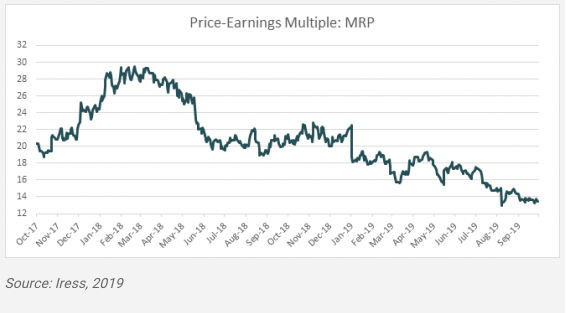
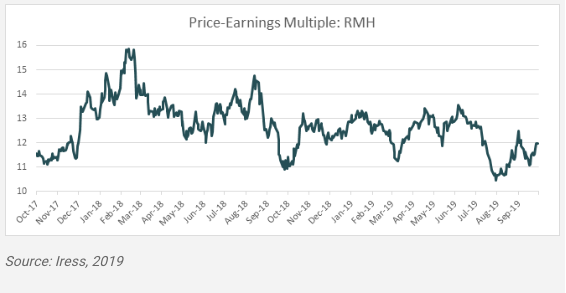
The charts below illustrate the dividend track records of some of the companies the Marriott Dividend Growth Fund currently invests in. As you can see, it pays to be the nice guy:

ESG in the rest of the world

Overseas too, the Financial Times noted this month that ESG tends to seriously outperform in some key areas. “ESG assets under management have grown the fastest among smart beta strategies, at a compound annual growth rate of more than 70 per cent over the past five years, according to a recent report from Bank of America Merrill Lynch,” it said. In Europe, Lipper EMEA Research noted that “we have witnessed an above average increase of assets under management driven by market performance. Additionally, a high percentage of the overall net inflows in the European fund industry are invested in mutual funds and ETFs with a sustainable investment approach.”

ESG funds offer exciting opportunities for investors. They are still a tiny portion of the market in SA with not much but the fact that they’re a buzzword known about them when it comes to the average investor.

Just like with any other change in investment strategy, this requires a comprehensive conversation before making any switches, but if you’re looking for new options – ESG funds could be a great addition to your portfolio.

December-proof your investing

December should be a time of peace, cheer and goodwill to all men. But, if you’re a South African investor, it’s the month that likely brings up residual trauma of some decidedly un-jolly happenings from recent years’ Decembers. Cabinet reshuffle. Nenegate. Steinhoff. What is it about the twelfth month of the year that turns the festive season into the silly season?

If you’re understandably nervous this time of year as an investor, fear not. While no portfolio is fireproof to completely uncontrollable events like black swans and major unforeseen global macroeconomic events (like the first 2016 Brexit referendum), there is a lot you can do to limit your exposure to market-affecting shenanigans on the home front.

Here are a few ways to ensure that your portfolio doesn’t go ‘ki Dezember’ crazy this month, if the markets do:

Manage your emotions

It’s amazing how simple logic is so easily questioned when the buying of Christmas gifts, expensive holidays, Black Friday remorse and seeing far more family and friends that we usually do all play into the mix. Against this highly emotionally charged backdrop people tend to behave a little irrationally. And, when it comes to investing, emotional = dangerous.

The age-old maxim of ‘buy low, sell high’ works for a reason. And, most of the year, you may well stick to it. In December, be aware that you may try to knee-jerk sell. Don’t do it. Unless a major macroeconomic event like the actual apocalypse is happening, let’s have a quick WhatsApp catch up or a short phone call to double-check the best options.

Cash is king – in context

You don’t get much more liquidity than cash. And in times of trouble or uncertainty, people opt for several versions of the old ‘cash under the mattress’ trick, like holding cash in a standard bank account or stocking up on Krugerrands.

Cash is an option, but it works best inside of a diversification strategy. Nothing short of a very well-proven crystal ball will help you move exactly the right thing at the right time to the right place. It’s about having all your assets in different places, different classes and with different levels of liquidity that will see you through.

Don’t make any sudden moves

When it comes to investing, always remember: any change costs something. A change when everyone else is pulling the same change (like investing offshore), is also expensive. Try not to suddenly pull huge lump sums out of equities and into a different class without it being in line with your long-term strategy.

A move like this, which may seem simple enough, could cost you five times: the price of the fee to pull money out of equities, the setup price of moving into bonds, the loss of momentum on your equities, the loss of any compounding you may have been about to tap into or eventually attain on your equities and the price of starting from zero in the new asset class.

Switching things up in your portfolio is sometimes necessary, but it must be done inside of a comprehensive strategy, not a panicked whim. When nearing the end of an investment term, it could be a good time to change your weighting in various classes and the diversification of your portfolio. Feeling scared watching the news is not.

Be commitment wise

Don’t get involved in something you don’t know well. December is often the time of year-end bonuses. Feeling jolly, you may think: ‘hey, why not try out Bitcoin?’

Unless you’ve been studying the market history, inner workings and headlines surrounding Bitcoin for more than a year, maybe give it a little more thought.

Many tried this back in 2017 when Bitcoin was trending and either lost all that irreplaceable, untraceable investment in a hacker’s spree or waited until December 2018 to find out it was worth 80 percent less.

Ultimately, investing always works best when you have a trusted, second opinion to every move you want to make. Either knuckle down and focus on the people around you and let your money work for you, or let’s get in touch and have a comforting cup of coffee to bolster your portfolio.

Don’t spend it all

There is ample research to show that December is by far the most financially stressful time of the year for most people. Spending pressure is more emotionally charged than almost any other time of the year.

Luckily, December need not be all doom and gloom for your wallet. Like many situations that seem at first glance insane, it just requires a plan.

Here are our top tips to get you through the festive season without major money haemorrhage:

Step 1: Calculate exactly how much you’ve got

Unless you have it in writing or in your bank account, this does not include that Christmas bonus. This includes how much funds you have… until the end of January.

The trick to getting through December is not to just think up until the 25th but, rather, look at the fact that you will likely be receiving your next salary only 30 days after that. When do school fees need to be in by? What about buying back-to-school stationery with the same pay check that you will be using for present shopping?

While this may sound like a sure-fire way to get even more stressed about December, it’s the opposite. It allows you to cap your spending in December so that you still have enough for January.

Step 2: It’s the thought that counts

Little things add up when it comes to actual Christmas, and to the rest of ‘ki Dezember boss’ and ‘Januworry’ too. Try think of exactly what food and household items you’ll need to get you through both months and buy them in bulk. This follows on comfortably from the first tip – when you know how much you have to work with, you can be savvy with what you have.

Take a long hard look at your diary and consider investing, along with your family, time over the next few weeks to hand-craft what you can. That may mean homemade wrapping paper or less pies from Woolworths. Either way, it adds up.

Also, don’t underestimate the value of just asking someone what they want for Christmas. It may be a lot less expensive than the thing you were eyeing that you thought they’d love.

Step 3: Avoid December debt

Always try to avoid borrowing money to spend money. That includes December groceries and overspending on things you really don’t need or have space for. If you find yourself in serious financial straits, see if there is a temporary loan you can get from a loved one instead. Anything but bad debt.

Step 4: Put it away instead

It almost seems like money is made for spending when it comes to December, but if you have carefully budgeted, you might be able to have some extra cash to save.

Whether that means squirreling it into an emergency fund, topping up some of your investments or putting it into your retirement annuity, make sure it goes into a safe place. Unaccounted-for money has the tendency to disappear into mindless sending at the best of times, and December is the worst of times when it comes to that.

If you follow all of these tips, there’s no reason why you and your finances shouldn’t be more jolly this December. Ho ho ho!

Reasons to be happy about inflation in SA

People are often quick to comment on doom and gloom posts and add their voice, and with the current subdued economic outlook, there seems to be plenty to be grim about. But what if we looked at something, like inflation, and highlight a positive South African success story?

“… Inflation??” you cry.

Hear this out.

When people speak of inflation, it’s often the villain of the financial story. It’s blamed every time we swipe our cards to pay for goods and services, or look into our bank accounts when times are tight.
And why not? After all, the very concept of inflation is that our money is now worth a little less than it was before.

But, inflation is not that bad guy it’s made out to be. In fact, the lack of inflation can be far worse.

When inflation is bad

Most people confuse inflation with hyperinflation – an excessive amount of inflation in a short space of time. A classic example of hyperinflation is what happened to the Zimbabwean dollar. In first world countries, hyperinflation usually only happens in very dire circumstances (the German Deutschmark after WW1 comes to mind).

Inflation, on the other hand, is when the prices of things in a country go up moderately, usually three percent or less in one year. Just under two percent is considered typical.

When inflation is good

Inflation can be good for three kinds of people: savers, earners and investors. If you are simply spending all your money, inflation is undoubtedly negative in the short term. You can now afford less things than you could before. Inflation also does – in most cases – tend to trickle down to salaries as many employers aim to increase salaries on a regular or annual basis in order to compensate for inflation.

But if whatever you have isn’t likely to be spent any time soon, inflation can be a very good thing. To put it very simply, inflation is measured by economists as how much money is exchanged for goods or services in a country. This means that the money part of the equation increases in value.

If you have used that money to buy, for example, a house, then that house is now worth more than it was. Someone else wanting to buy it from you after an inflation hike would have to pay you more than you paid at first. This means that, for investors, inflation is great.

The world’s ongoing inflation woes

Global markets, particularly the US, haven’t had material inflation in quite a while. Risk of deflation has been talked about – more than a decade, in fact – and that is indeed very bad.

Deflation is what economists call ‘demand-pull inflation’ – when you have too much supply and not enough demand on goods. This happened to the property market in America in 2013 and, to a lesser extent, has just happened a couple of years ago in South Africa. House prices plummeted by as much as 30%, meaning that no one was buying. Why buy now, when you can wait a month and get an even better deal then? People couldn’t sell their houses without losing a lot of money.

South Africa and inflation

In contrast to elsewhere, South Africa has been relatively protected from inflation issues. We mostly hover around the four percent mark, with increases of less than two percent a year.

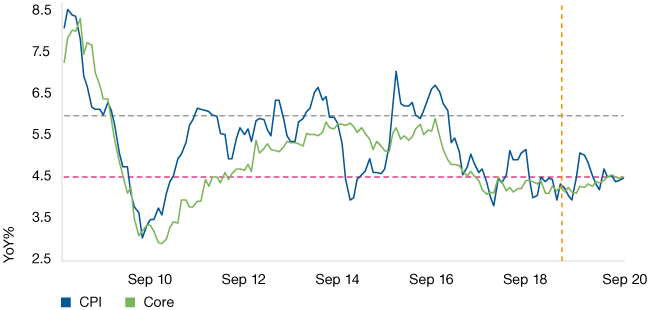
According to Investec: “during the past two decades, the significant swings in South Africa’s inflation rate have been driven to a large extent by exogenous shocks, mainly energy prices (international oil prices and domestic electricity tariffs), food prices and the exchange rate. More recently, inflation appears to be firmly under control… headline inflation has been within the target range of 3-6% since April 2017.”

Investec goes on to say that their “current forecast is for headline inflation to average 4.2% in 2019 and 4.6% in 2020, compared with the SARB’s forecasts of 4.2% and 5.1%. We expect core inflation to average 4.2% in 2019 and 4.4% in 2020. By historical standards, inflation is subdued, but not dead, and not without risks. We assess these risks, however, to be fairly balanced.”

This is quite different from other countries, whose inflation rates are well below that are starting to be a real concern.

(Source: Statistics South Africa and Investec Asset Management, as at 30.09.19. Investec Asset Management forecasts are from 01.09.19 onwards.)

Silver lining investments to get you through slump time

They say to make hay while the sun is shining, but what about during overcast conditions?

The current outlook for SA investors is not as stormy as it was two years ago, but it certainly isn’t clear skies.

While we started the year filled with new optimism in a new president and the looming threat of state capture vanishing, other problems have remained. Thanks to Eskom, plummeting business confidence scores, policy uncertainty and a host of other factors, we haven’t quite seen the economic rally we hoped we would in 2019… 

Luckily, the best thing about markets is that when one thing slumps, another soars. Thanks to some rather unexpected material de-rating, lucrative equity options that were previously high-priced are now more affordable. This is not to say that you should jump ship, not at all! It’s merely evidence of how we can find alternatives in a market that may have us feeling a little confounded.

Mr Price Holdings

In the face of equivalents like Truworths, Mr Price Holdings has shown ongoing rallying in the face of tough conditions – and, right now, the price is appealing to many investors. According to Cannon Asset ManagersChief Investment Officer, Samantha Steyn, “the current valuation is attractive, with a P/E multiple of 13.3 times and dividend yield of 4.6 percent – as compared to its historical five- and ten-year average P/E multiples of 21 and 20 respectively.

Multichoice

Despite competitive rumblings from the likes of Netflix muscling in on DStv’s territory, MultiChoice is going strong. “The current price (around R120 per share) offers an attractive entry point into this high-quality investment. The group has operational leverage thanks to several cost-optimisation strategies, as well as the ability to grow market share in the middle and mass markets,” says Steyn.

And with sports being MultiChoice’s main drawcard still and the Rugby World Cup having received a lot of viewers, this quarter’s figures will likely be even better.

RMB Holdings

Arguably the most exciting opportunity right now is FirstRand giant RMH, normally well out of reach individual investors. Steyn says that “RMH’s discount to net asset value (NAV) is currently around 11 percent, thus offering an attractive investment into FirstRand. This compares to the three- and seven-year average discounts to intrinsic value of 6.8 percent and 3.3 percent respectively.”

Unlike MRP Holdings and MultiChoice, there have been no big uncertainties shaking the price here, and FirstRand has had a cracker of a year so far, well in line with a recent track record of several stable, good years in a very unstable time. The current price-earnings (P/E) multiple is 12.8 times, with an attractive dividend yield of 4.6 percent. And with FirstRand’s ROE projected to be around 22 percent, this promises to be a very good deal indeed.

These are just three examples and far more exist for us to consider in the face of restlessness or looking for new opportunities. It just goes to show that you don’t have to wait for the sun to be shining to make some hay.

Reasons for SA SMEs to smile

It’s not always easy to see, but there are unexpected positives in South Africa’s current financial situation. Of all the segments of our population who could be grumbling, many would say that SME owners are right up there. Squeezed like the middle-class tax payers, but with the added brutal success figures of less than 10 percent after two years, SMEs seem to have it doubly rough.

But could there be a silver lining?

Things cost the same

As Allan Gray noted recently, global markets’ gloomy outlooks have had a surprising upside here: “commodity prices have held up well, but are vulnerable should growth slow further. Inflationary pressures continue to be benign and the bias among central banks is towards monetary easing.”

While this is far from good for the US, Brexit-wracked UK and investors everywhere, it’s very good for people spending money in SA who cannot afford to spend a lot. 

Why? Because this means prices of goods are likely to remain stable, without the deflation woes of developed nations. That means SMEs needing to spend money to get their companies off the ground will need to spend less than if global markets were soaring.

Mboweni is on your side

Mboweni’s economic policy paper released at end August, titled Transformation, Inclusive Growth and Competitiveness: Towards an Economic Strategy for South Africa, has been cited as a likely catalyst for change. The paper was ground-breaking on several levels.

It introduced the idea that public sector companies must pay interest on late payments to private sector companies – never before suggested in SA – and gave the most specific plan on reducing SME red tape we’ve seen in years. The paper even proposed the creation of an entirely new regulator to boost business – a subcontracting ombudsman. All of this, if it comes through, bodes very well for business confidence figures, which have been one of the biggest negative impacts on SME growth in recent years.

If you’re running a small business and doing your bit to support the economy, take heart and keep going! It has been tough, but we’re seeing positive conversations taking shape.

Investing masterclass: Four tips for the long game

When it comes to coffee-shop conversations, little is said about the long game in the investment space – it’s often about which asset manager did well this year, what outperformed everything else in the last quarter… etc.

But, if you’re an investor, chances are high that you’re saving for future events that have a five-year-plus event-horizon (as we all should!).

Here are four thoughts for investors looking to improve their long-term results. If you’re feeling shaky in your investment behaviour, these will certainly help to master your long game.

Tip 1: The past does not predict the future

It’s the most common mistake in the book, so entrenched in investment culture that even the most seasoned among us fall into this trap. It’s the thinking that ‘X Asset Managers beat the index by nine percent last year so they’re the best bet this year’. X Asset Managers in turn, who may not even have the same actual people on board anymore or may have undergone a whole host of other changes to the ‘magic formula’, adjust their fees up accordingly.

There are plenty of problems with this. One is that, if you keep a close eye on the top performers, you’ll notice that the same managers are almost never ever in the top spot consecutively. This means that if you doggedly follow the best performers, you’re going to switch funds every year, decimating your return potential.

Secondly, as we’re well aware of in other spheres of life but conveniently forget in investing, our global future and rate of change in the next decade will be different to anything in the last century.
“But surely that won’t change the actual nature of the markets,” some may say.

Yes, it can. We’ve already had what should be an impossibly long bullish cycle and more black swan events in a decade than ever before. We need to beware.


Tip 2: Switching frequently is usually a bad idea

Most of us know the two cardinal sins of investing: not preserving when switching jobs and chopping and changing funds or managers too often.

But what about when a crisis hits? Switching from other assets into cash may be just as harmful.

When the going gets tough, generally, most investors go for cash. And there is some wisdom to this – cash is a great low-risk asset that generally does well in times of crisis and is therefore event-horizon specific. But taking money out of, say, equities, and exchanging it into cash is often a case of winning the battle but losing the war.

The thinking is that ‘if I get this out of equities before equities experiences a downturn and put it into cash, then switch it back, I’ll save the amount I would have lost.’ This gambles the losses from switching with the gains made from avoiding a loss when markets turn south. The problem with this is that most (who are not whizz asset managers by profession) will get the timing wrong. This leaves you with two losses when, longer term, simply staying put would have made more sense.


Tip 3: Care about shares

There are widely held misconceptions about different asset classes, many of which are harmful for players of the long game in investment. One of the most common is that equities are risky while bonds are safe, and cash is the safest of all. And a short-term glance at the market may seem to confirm this belief, however the opposite is true when it comes to longer-term strategies.

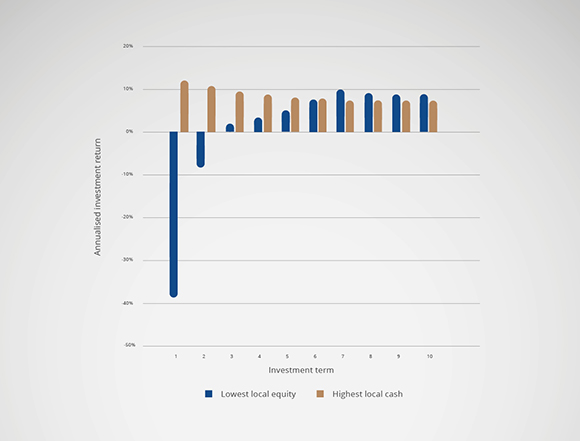
Think of investing in cash (a.k.a. the money market) as the investors’ equivalent of stuffing your cash under the mattress. If your aim is to not lose any money – then you’re in luck. That money may be safe from being lost short-term. But it’s also not growing as much as it could, while other things like CPI are making it worth less and less. Equities, on the other hand, have shown to give back the bigger returns compared with cash longer term, even though short-term your chances of making losses are higher.

The lowest annualised local equity returns versus the highest annualised local cash returns over different investment terms

Based on historical returns data since 31 November 2007. Source: Morningstar to end of December 2018


Tip 4: You get what you pay for

One of the biggest ‘grudge purchases’ of the financial world, after insurance, is the fees associated with funds. Some charge two or three percent, others far less. Most investors see that as three percent that could have been invested on their behalf that’s now going into someone else’s pocket.

However, you really do get what you pay for often with funds, just like everything else. According to Discovery’s August Smart Money newsletter, “the total expense ratio (TER) of an investment fund gives an investor an indication of the total fees of that fund. If we compare a relatively high-cost fund (TER of 2.47% in 2008) with a relatively low-cost fund, (TER in 2008 of 1.41%), the ten-year return from the more expensive fund was 77% higher than that of the less expensive fund.”

The good news is that regulation has cracked down significantly on what a fund may legally charge in terms of fees, why they charge fees and how transparently they disclose this information. In essence, you should only pay so much and know precisely what it is you’re paying for. If not, the law is on your side as the consumer, something which wasn’t always the case when this industry was younger.

Having enough for future life events is a marathon, not a sprint. Let’s put these four tips into play, and you and your wealth will be able to go the distance.

Original article: Discovery


The dollar’s time is running out

South Africans (and many others) sometimes suffer from an unbalanced bias when it comes to the United States: we assume that anything American is top-class. Certainly, when talking about the markets, South Africa’s indices and analyses are always about what America is doing. The dollar has, for a long time, been the most influential currency.
However, this may not be for much longer. Investors are preparing for what’s becoming known as ‘de-dollarisation’.

What is de-dollarisation?

De-dollarisation simply means the usual suspects in terms of the most influential currencies in the world (not to be confused with the strongest – the GBP is still queen in terms of strength but doesn’t affect markets the way the dollar does or as frequently, typically) are going to affect markets less tyrannically than before. Where the Dollar and Euro dominated currency ‘influencers’ before, we’ll see other currencies becoming more important, while the dollar becomes less so.

In one sense, this is simply a long-overdue effect of globalisation. Last century, America was the centre of the world in terms of just about everything economic, but that began to change years ago in many spheres.

So, currency-wise, if we get less dollar starstruck over time, who will be influencing us more?

The sun rising in the East

The same people who affected America’s fall from the number one spot in many other areas including trade has been China and her neighbours. Asia has seen a meteoric rise in trade, industry and economic influence that will likely see emerging economies more impacted by the Yuan (or Renminbi) and other Asian currencies, rather than the dollar, over time.

What will be the impact be for investors, when de-dollarisation finally hits? It’s impossible to say, really, as it will be a world-first for the rand and many others, but it may have some positive effects. Thanks to the Trump administration, the USD has been notoriously volatile of late, and it’s likely Asian currencies will be far more stable and predictable. In general in investment, boring predictability is good for business.

And, if you’re interested in long-term views, there’s even better news to look forward to.

The even brighter future after Asia

Will Eastern currencies always be dominant? Unlikely. It may take a long time, but new currencies will probably emerge as independent world powers. And they’re likely to come from… Africa.

Yes, you read that right.

China and her surrounds are doing well, but are also by and large ageing populations, who have seen massive shifts recently thanks to their success. For example, while Asia’s population were largely working parents and corporate tycoons, business confidence figures and savings rates boomed. But now, much of those same people are entering retirement age, stopping and even drawing on those savings and no longer working to help the FDI (foreign direct investment) roll in at the same rate.

By contrast, most of Africa (except SA) is the youngest continent in the world, with far more people of working age than retirement. The US Pentagon even estimates that, by the end of the century, as many as one in every three people on the planet will be African. Africa’s tourism has grown a whopping seven percent in the past year alone, exports are booming too, and there are no signs of slowing down.

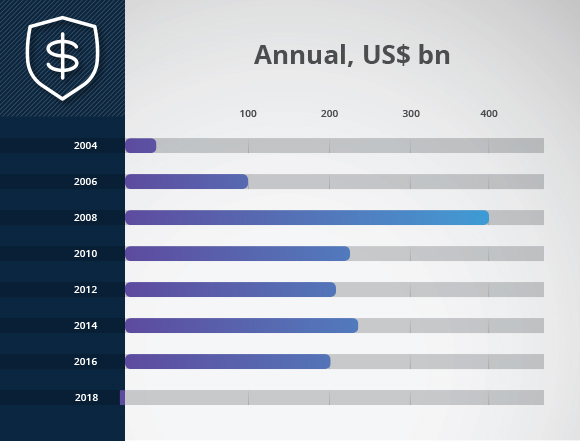
China’s vanishing current account surplus

Source: State administration of Foreign Exchange, 2018

The bottom line

Hold onto the old adage: don’t place all of your eggs in one basket. What this means is that as the popularity for moving funds offshore increases, or more people consider financial emigration, it might be wise to bear in mind that the Dollar is no longer a ‘sure thing’.

Starting your business is going to get easier!

South Africa is an enterprising and entrepreneurial nation… which is why it’s interesting that it can be so tough to do business here.

Of all new businesses started in South Africa, nine out of ten of them will close their doors within the first two years. Government grants are talked up but are thin on the ground, B-BBEE requirements are onerous and keep changing, and then there’s the red tape.

Bureaucracy has been South Africa’s Achilles’ heel in the corporate sector for a long time, and figures show that it’s hamstrung us in the past. In the 2009 World Bank’s annual ‘Ease of Doing Business’ survey, South Africa was at a not-great-but-comfortable 32nd in the world out of almost 200 nations. But by 2014, just five years later, that figure had slipped to 43rd in the world.

And in 2019? We are now at a nail-biting (and embarrassing) 82nd place out of 190 countries.

So, what’s a business owner to do? Cut and run for easier, greener pastures?

Actually, hanging tight might be a better solution, because it looks as though doing business is about to get far less complicated. Fast!

Orders from the top

When Cyril Ramaphosa became president of South Africa, the corporate sector cheered. Not just because of the alternative, but because of the significant fact that, for the first time in our democratic history as a nation, the man in charge was a seasoned entrepreneur first and a politician second. For example, while previous South African presidents have mentioned ‘boosting business’ in vague terms, President Ramaphosa has been uniquely articulate about his focus.

He said in his most recent SONA speech that government is:

 “urgently working on a set of priority reforms to improve the ease of doing business by consolidating and streamlining regulatory processes, automating permit and other applications, and reducing the cost of compliance.”

“The World Bank’s annual Doing Business Report currently ranks South Africa 82 out of 190 countries. We have set ourselves the target of being among the top 50 global performers within the next three years,” he said again during his second SONA in June – the first mention of the World Bank survey ever by a president during SONA.

These pronouncements are starting to bear fruit. Marginal rallying of SA’s business confidence scores (after decreasing slightly again in July and August) shows that the private sector is willing to change its mind about SA’s business growth prospects, which can only be good news. And during the year, the ‘ease of starting a business’ aspect of South Africa’s World Bank ratings has improved by 1.25 percentage points.

This may seem like a small change, but it’s certainly a start in the right direction! And it is a welcome sign to local businesses that things are getting better and not worse for entrepreneurs here in SA. 

We can be positive about our future – things are about to get better!